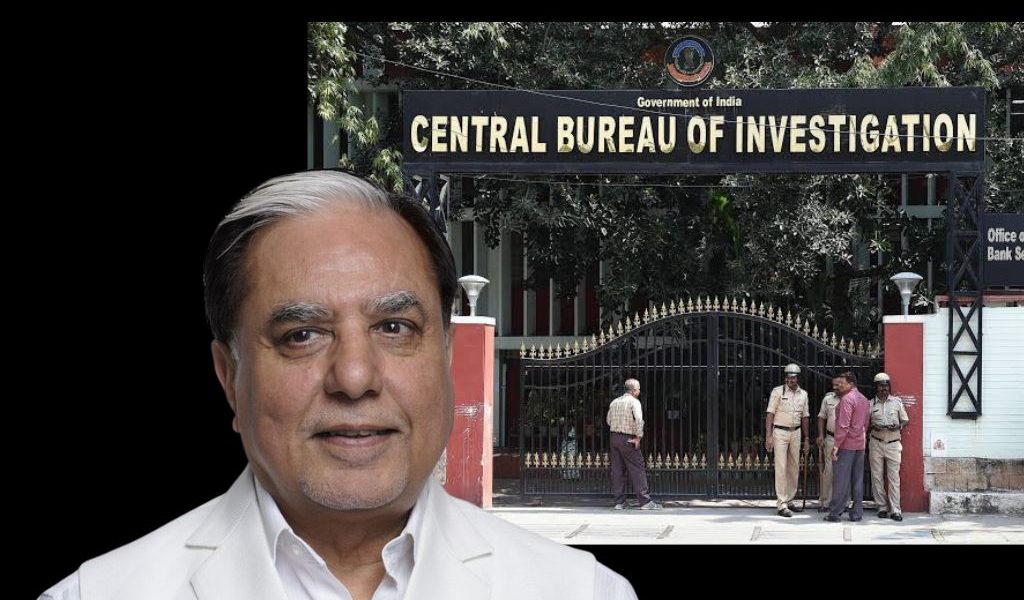
A facilities totaling ₹980 crore in 2018. One certificate reportedly put Chandra’s net worth at about ₹59,113 crore, while another placed it at ₹40,562 crore. LIC Housing Finance later alleged that the loans defaulted and that its total claim exceeded ₹1,322 crore. The CBI has registered a case, but the allegations have not been established in court.
Introduction
The Subhash Chandra CBI case has brought renewed scrutiny to the financial declarations used to support large corporate loans and to the dramatic differences between historical net-worth figures attributed to the Essel Group founder and figures disclosed during his later personal insolvency proceedings.
The Central Bureau of Investigation (CBI) has registered a case following a complaint from LIC Housing Finance Ltd (LICHFL) concerning two loan facilities sanctioned in 2018. Together, the facilities amounted to ₹980 crore and were connected to companies that had Subhash Chandra as a guarantor. LICHFL alleges that inflated net-worth certificates were among the documents used in the loan process.
At the centre of the complaint is a striking discrepancy in reported net-worth figures. A certificate dated March 2018 allegedly placed Chandra’s net worth at approximately ₹59,113.21 crore, while another certificate issued a few months later put it at ₹40,562 crore. During subsequent personal insolvency proceedings, however, Chandra disclosed a personal net worth of about ₹31.79 crore in 2024, according to reports based on the lender’s complaint and insolvency proceedings.
It is important to stress that the CBI registration represents an investigation into allegations. It does not establish that Chandra committed fraud or that the disputed financial certificates were deliberately falsified.
What Happened?
The case relates to two separate credit facilities extended by LIC Housing Finance in 2018.
According to the complaint details reported by multiple news organisations, one facility was worth ₹500 crore and was extended to Vasant Sagar Properties Pvt Ltd, with Pan India Infraprojects Pvt Ltd as co-borrower.
The second facility was worth ₹480 crore and was extended to Digital Subscriber Management and Consultancy Services Pvt Ltd, with Spirit Infrapower and Multiventures Pvt Ltd as co-borrower.
The two facilities therefore totalled ₹980 crore. Chandra provided personal guarantees connected with the facilities.
LIC Housing Finance subsequently alleged that the accounts defaulted and that the lender’s claim grew beyond the original loan amount because of outstanding principal, interest and other dues.
Reports citing the complaint put LICHFL’s total claim at approximately ₹1,322 crore. That is why some headlines describe the matter as a ₹1,322-crore case even though the original two loan facilities totalled ₹980 crore.
The central allegation
LICHFL’s complaint alleges that financial certificates showing Chandra’s substantial net worth were submitted during the loan-sanction process.
The lender is now questioning the reliability of those figures in light of statements and disclosures made during Chandra’s later insolvency proceedings.
That discrepancy is at the heart of the criminal investigation.
Key Details of the Subhash Chandra CBI Case
The most important facts reported so far are:
- CBI: The Central Bureau of Investigation has registered a case following the complaint by LIC Housing Finance.
- Original loan facilities: Two facilities totalling ₹980 crore.
- First facility: ₹500 crore involving Vasant Sagar Properties Pvt Ltd and Pan India Infraprojects Pvt Ltd.
- Second facility: ₹480 crore involving Digital Subscriber Management and Consultancy Services Pvt Ltd and Spirit Infrapower and Multiventures Pvt Ltd.
- Personal guarantee: Subhash Chandra provided continuing guarantees connected with the facilities.
- Alleged net worth: One certificate reportedly valued his net worth at approximately ₹59,113.21 crore as of March 31, 2017.
- Second certificate: Another certificate reportedly put the figure at approximately ₹40,562 crore.
- LICHFL claim: The lender has alleged an exposure of more than ₹1,322 crore after defaults and accumulated dues.
- Later personal net worth: Chandra’s insolvency disclosures put his personal net worth at approximately ₹31.79 crore in 2024.
- Current status: The CBI investigation is ongoing, and the allegations have not been judicially established.
The ₹59,113-Crore Net-Worth Figure Explained
The most striking element of the complaint is the reported ₹59,113.21-crore net-worth certificate.
According to reporting based on the LICHFL complaint, a certificate dated March 28, 2018, certified Chandra’s net worth at approximately US$6.197 billion, equivalent to around ₹59,113.21 crore at the relevant conversion used in the document, as of March 31, 2017.
A second certificate dated July 6, 2018, reportedly valued his net worth at approximately ₹40,562 crore.
LICHFL’s allegation is not simply that the numbers later changed. Its complaint raises questions over whether the figures presented to the lender were accurate and whether they played a role in the sanction and disbursal of the loans.
That distinction is legally important.
A difference between two financial valuations does not automatically prove criminal wrongdoing. Investigators would have to establish how the certificates were prepared, what assets and liabilities were included, who supplied the underlying information, whether the figures were knowingly false, and whether they materially influenced the lending decisions.
Those are matters for the investigation and subsequent legal proceedings.
What Did Chandra Say About His Net Worth?
The dispute over Chandra’s wealth also appears in his separate personal insolvency proceedings.
According to reporting on the insolvency case, Chandra’s disclosed personal assets were valued at approximately ₹31.79 crore in 2024, including a residential property valued at roughly ₹25 crore. His office has disputed the interpretation of much larger historical figures, arguing that some calculations had effectively treated the value or market capitalisation of Essel Group companies as his personal wealth.
Chandra has also said publicly that he did not personally borrow the enormous sums associated with the broader insolvency proceedings. His position has been that he provided personal guarantees for borrowings by companies associated with the Essel Group.
That distinction is relevant because a personal guarantee is not the same thing as the guarantor personally receiving the original corporate loan proceeds.
However, a personal guarantee can still create significant liability if the underlying borrower defaults, subject to the applicable legal and insolvency process.
How the CBI Investigation Fits Into the Insolvency Case
The new criminal investigation comes against the backdrop of a separate and already complicated personal insolvency proceeding involving Chandra.
In August 2026, an NCLT process considered a repayment plan involving only a few crore rupees from Chandra’s personal estate against admitted creditor claims of approximately ₹22,006.57 crore.
However, that development should not be confused with the ₹980 crore LIC Housing Finance facilities.
These are separate figures arising from different proceedings.
Three numbers that should not be confused
₹980 crore:
The combined value of the two LIC Housing Finance loan facilities at the centre of the CBI case.
₹1,322 crore:
The amount LICHFL has reportedly claimed in connection with those facilities after accounting for outstanding amounts, interest and other dues.
₹22,006.57 crore:
The much broader admitted claims involved in Chandra’s separate personal insolvency proceedings relating to guarantees for borrowings associated with the Essel Group.
Keeping these figures separate is essential for understanding the story accurately.
NCLT Proceedings Add Another Layer to the Story
Chandra’s personal insolvency case has itself undergone significant developments.
A five-member NCLT special bench on September 1, 2026, stayed the operation of an earlier order concerning a repayment plan under which Chandra would contribute approximately ₹6.25 crore toward admitted claims of more than ₹22,000 crore.
The special bench said there was no clear majority view from the earlier proceedings and ordered that the matter be heard further. It also restrained Chandra from directly or indirectly alienating his property while the proceedings remain pending.
This insolvency development is separate from the CBI’s investigation into the LIC Housing Finance loans, but it provides important context for why Chandra’s historical and current net-worth figures have attracted heightened scrutiny.
Background: Who Is Subhash Chandra?
Subhash Chandra is the founder of the Essel Group and a prominent figure in India’s media and business sectors. He was closely associated with Zee and other businesses built under the broader Essel umbrella.
His business empire expanded substantially across sectors including media, entertainment, infrastructure and other ventures.
The financial difficulties associated with several Essel Group businesses subsequently resulted in significant disputes with lenders and creditors.
Chandra’s personal insolvency proceedings arose in the context of personal guarantees connected with corporate borrowings. The latest CBI case introduces a separate criminal-investigation dimension focused specifically on allegations concerning financial representations made in connection with LIC Housing Finance lending.
What LIC Housing Finance Alleged
The lender’s complaint forms the basis of the CBI investigation.
LICHFL’s allegations centre on the proposition that the net-worth certificates submitted during the loan process were materially inconsistent with figures later presented during insolvency proceedings.
The lender has also alleged that the loan accounts subsequently defaulted, resulting in a substantial financial exposure.
Reports on the FIR say the CBI has named Chandra along with other individuals associated with the borrowing companies. The Statesman identified Pankaj Suroliya, Amish Pandya and Rajeev Dholakia among those named in the case.
The investigation is expected to examine the roles of the individuals, companies and professionals involved in preparing, submitting and relying upon the disputed financial documents.
What the CBI Is Investigating
At this stage, the CBI’s case should be understood as an investigation into alleged financial misrepresentation and related conduct.
Key questions investigators may need to address include:
- Who prepared the disputed net-worth certificates?
- What assets and liabilities were used to calculate the reported figures?
- Were the figures based on personal assets or valuations connected to group companies?
- Were the certificates knowingly inaccurate when submitted?
- Did the certificates materially influence LICHFL’s lending decisions?
- How were the ₹980 crore loan facilities used?
- What caused the eventual defaults?
- What financial loss did LICHFL ultimately suffer?
- What roles did the other accused individuals and borrowing companies play?
These questions cannot be answered conclusively from the registration of an FIR alone.
Why This Matters
The case is significant for more than the individuals involved.
1. It raises questions about financial due diligence
Large lenders rely on financial information, guarantees, valuations and other documentation when assessing credit risk.
If investigators establish that materially false financial information was knowingly provided, it could raise broader questions about how such information was verified before large credit facilities were sanctioned.
2. It highlights the difference between corporate wealth and personal wealth
The controversy also demonstrates why a business promoter’s personal net worth cannot automatically be equated with the market value of companies associated with that promoter.
A company’s assets, shares, liabilities and market capitalisation are legally and financially distinct from an individual’s personal estate.
3. It connects lending disputes with personal guarantees
The case also illustrates the importance of personal guarantees in large corporate borrowings.
A promoter may not personally receive the loan, but signing a guarantee can expose personal assets to claims if the borrowing company defaults, depending on the legal structure and proceedings involved.
4. The numbers require careful interpretation
The ₹980 crore, ₹1,322 crore and ₹22,006 crore figures refer to different aspects of the broader financial dispute.
Presenting them as one single liability would be misleading.
What Happens Next?
The immediate next step in the Subhash Chandra CBI case is investigation.
The CBI will examine the complaint, loan documents, net-worth certificates, guarantee documents, records of the borrowing companies and other relevant evidence.
Investigators may also need to establish the circumstances under which the disputed certificates were prepared and submitted and whether the information contained in them was knowingly inaccurate.
The criminal investigation is separate from the NCLT insolvency proceedings.
Meanwhile, the NCLT’s September 1 intervention means Chandra’s personal insolvency repayment plan remains subject to further proceedings. The five-member bench stayed the earlier order and restrained the alienation of his assets while the matter is considered.
There is therefore no final judicial finding at this stage establishing that Chandra committed the alleged fraud.
The outcome will depend on the evidence gathered by investigators and subsequent proceedings before the appropriate courts or tribunals.
The Bigger Picture
The Subhash Chandra case is unfolding at the intersection of corporate lending, personal guarantees, insolvency and financial disclosure.
The most important issue for investigators is not simply why Chandra’s reported net worth changed dramatically over time. Financial valuations can change because of market conditions, debt, ownership structures, asset sales and other factors.
The central question is whether the particular financial information presented to LIC Housing Finance in 2018 was accurate when it was submitted and whether any misrepresentation was intentional and material to the lender’s decision.
That distinction will be crucial as the CBI investigation develops.
For readers following the case, the safest way to understand future developments is to separate allegations in the FIR, statements by Chandra or his representatives, findings by the NCLT, and any eventual findings by a criminal court.
At present, the CBI case remains an active investigation.
FAQs
1. What is the Subhash Chandra CBI case about?
The case concerns allegations by LIC Housing Finance that inflated net-worth certificates were used in connection with two loan facilities totalling ₹980 crore in 2018. The CBI has registered a case to investigate the allegations.
2. How much money was borrowed from LIC Housing Finance?
The two facilities at the centre of the complaint totalled ₹980 crore — ₹500 crore for Vasant Sagar Properties and ₹480 crore for Digital Subscriber Management and Consultancy Services, according to reports based on the complaint.
3. Why is ₹1,322 crore mentioned in the case?
₹1,322 crore represents the larger amount claimed by LIC Housing Finance in relation to the facilities after outstanding principal, interest and other dues were taken into account. It is not the original amount of the two loans.
4. What was the disputed net-worth figure?
One certificate reportedly dated March 28, 2018, valued Chandra’s net worth at approximately ₹59,113.21 crore as of March 31, 2017. Another certificate reportedly issued in July 2018 put it at approximately ₹40,562 crore.
5. What net worth did Subhash Chandra report later?
His personal insolvency disclosures reportedly put his net worth at approximately ₹31.79 crore in 2024, including a residential property valued at around ₹25 crore. His representatives have disputed interpretations of much larger historical figures.
6. Has Subhash Chandra been convicted of fraud?
No. The CBI has registered a case and is investigating the allegations. Registration of an FIR does not amount to a conviction or establish guilt.
7. Is the CBI case the same as Subhash Chandra’s insolvency case?
No. The CBI investigation concerns allegations connected to the LIC Housing Finance loans. The insolvency proceedings concern a much broader set of creditor claims linked to personal guarantees for corporate borrowings.
8. What is the latest status of Chandra’s insolvency repayment plan?
On September 1, 2026, a five-member NCLT bench stayed the earlier order concerning the repayment plan and restrained Chandra from alienating his assets while the proceedings continue.
Sources
This article was researched using current reporting and available legal/procedural information from:
- The Statesman, September 5, 2026 — details of the LIC Housing Finance complaint, the ₹980 crore facilities and disputed net-worth certificates.
- Financial Express, September 5, 2026 — CBI case, loan details and reported ₹1,322 crore LICHFL claim.
- NDTV, September 5, 2026 — report on the CBI case and disputed net-worth figures.
- The New Indian Express, September 5, 2026 — reported FIR details and the two net-worth certificates.
- India Today, September 5, 2026 — CBI investigation and connection with the separate insolvency proceedings.
- Economic Times, September 1, 2026 — NCLT special-bench proceedings concerning Chandra’s repayment plan.
- NCLT-related reporting, September 1, 2026 — stay of the repayment plan and restriction on asset alienation.
- India Today / Chandra’s office clarification, August 2026 — Chandra’s stated personal-asset and net-worth position.
